Meet Superhuman Docs, the newest AI-powered collaboration platform from Superhuman. The launch signals Coda’s move to become an AI-native product within Superhuman’s suite. Teams can write, organize, and build collaborative workspaces using artificial intelligence with Superhuman Docs. Plus, Superhuman Docs combines flexible documents with intelligent AI to simplify everyday workflows. The platform enables users to convert basic prompts into drafted content, organized tables, interactive interfaces and customized workspaces. That means organizations can embed AI directly into the collaboration workflows they already have, without disrupting how teams work together.
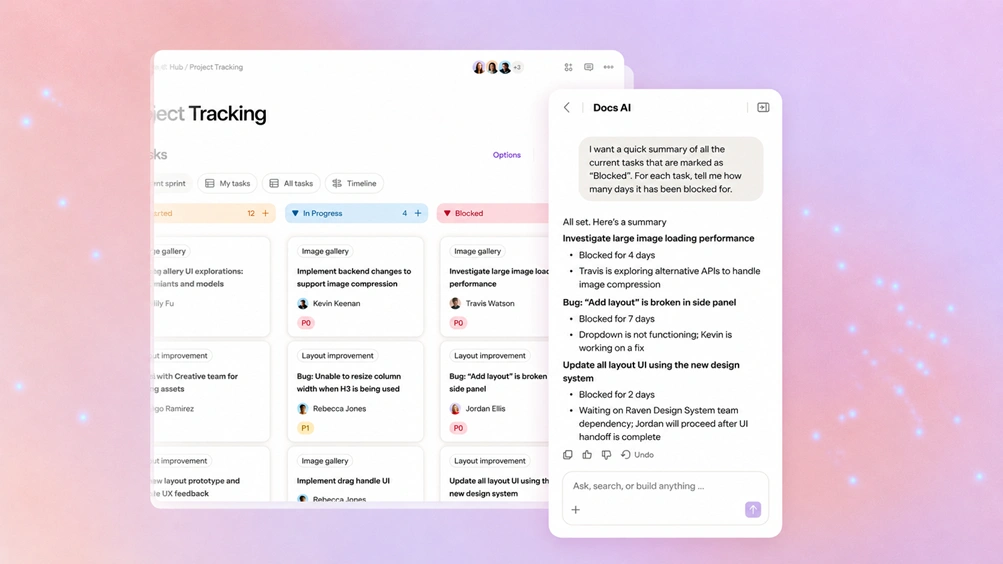
Docs AI is one of the biggest additions to the platform. This re-built AI assistant can read, plan, write, track and build within any document. Superhuman Docs is not like a traditional document editor. It includes interactive elements like tables, formulas, automations, live data connections, and more. Thus, teams can build project trackers, product roadmaps, content calendars, operational hubs and other collaborative resources all in the same workspace. Users just state their requirements in natural language. Docs AI then automatically generates formatted content, structured tables and document layouts. It also replies to comments, draws information from documents, pulls related web content, and advises on what users should do.
Another big addition is AI Views, available now in private beta. Users describe an interface, application or business tool and AI automatically constructs it from live table data. Additionally, these interfaces provide drag-and-drop functionality and AI-powered actions. They also automatically update when the underlying data changes. AI Views connects to enterprise platforms such as Jira and Salesforce. The platform also offers AI Blocks and AI Columns. AI Columns automatically fill information for each row, according to the user’s instructions. Meanwhile, AI Blocks provide real-time summaries, insights and suggested actions that refresh in real time as business data changes.
Superhuman Docs offers AI productivity to entire enterprise teams.
Superhuman also announced the private beta of Superhuman Databases. This is an enterprise level solution that supports databases up to 1 million rows. This means that organizations can centralize structured business data and connect it directly with collaborative documents. The MCP connectivity is another important addition. Superhuman Docs offers one-click integration with ChatGPT, Claude, Cursor and other AI tools. These AIs are able to read and update docs and tables in real time. Thus, users can continue working within their preferred AI applications while having synchronized business data. The company also unveiled new native desktop and mobile applications. The macOS app introduces tab navigation and native notifications. Redesigned iOS and Android apps also boast improved responsiveness and a smoother user experience.
Superhuman also launched Table Pages, a full-screen workspace purpose-built for structured datasets. Teams can use these pages for project tracking, workflow management, and mass editing of data. AI tools have been adopted rapidly, but Superhuman believes team collaboration has not kept up with individual productivity. Company research shows 65% of AI users say their personal productivity has gone up. But just 12% say AI has changed how their teams collaborate. Superhuman Docs solves this by building AI directly into the collaborative workspace. Users can build project trackers, meeting summaries, reports and planning documents in the same environment rather than copying information between different AI tools and documents. And teammates can work on results together, comment, make AI revisions, or build on projects, while staying in context.
“We’ve spent over 10 years making Coda the most flexible surface for teams to write, track, and build together,” said Lane Shackleton, Head of Superhuman Docs. “Superhuman Docs is the next chapter. When AI lives inside the same surface where teams already collaborate, it stops being a private tool one person uses in a side window and becomes a true team multiplier. Anyone can describe what they need, our AI uses context from the doc and builds it immediately, and the whole team can edit, refine, and improve on it together.”
“What Superhuman Docs does for an organization is make things simpler for the team,” said Pam Larson, an education technology Professional Learning and Development Leader. “It helps overcome the frustration of working in several different programs, makes teams more efficient, and adds to the professionalism of what they’re creating. I’m excited to have AI sitting inside the tools we use every day.”
AI-Powered Collaboration Supports Marketing, Sales, Product, and Executive Teams
Superhuman Docs helps teams with planning and execution. It generates documents from simple prompts, surfaces answers from existing knowledge, creates tables and charts, and writes formula logic with existing business context already included. Marketing teams can set up connected campaign hubs containing project goals, task tracking, launch status, executive summaries and content calendars. Docs AI also considers competitive positioning by analyzing real-time campaign data from other business systems connected to the platform. Sales teams can create account plans that stay up to date as opportunities change. The platform integrates directly with Salesforce pipelines to create quarterly business reviews with structured narratives, risk analysis, recommended actions, and charts that automatically update. Product teams can build dashboards using existing project trackers. Also, you can create custom roadmap or Kanban views for different departments from the same shared data source without duplicating data.
Automate planning exercises with executive teams
For instance, Superhuman Docs can take guest lists and turn them into interactive venue seating maps that automatically update as you change seating assignments. The new Superhuman Docs MCP goes even further, allowing ChatGPT, Claude, Cursor and other AI clients to generate documents, organize tables, refine notes and fetch related information — all from within AI conversations. Docs MCP is also available through Anthropic’s Connectors Directory and OpenAI App Directory, making it easy to work on enterprise AI across today’s productivity ecosystems.
Explore IT Tech News for the latest advancements in Information Technology & insightful updates from industry experts!
News Source: Businesswire.com