
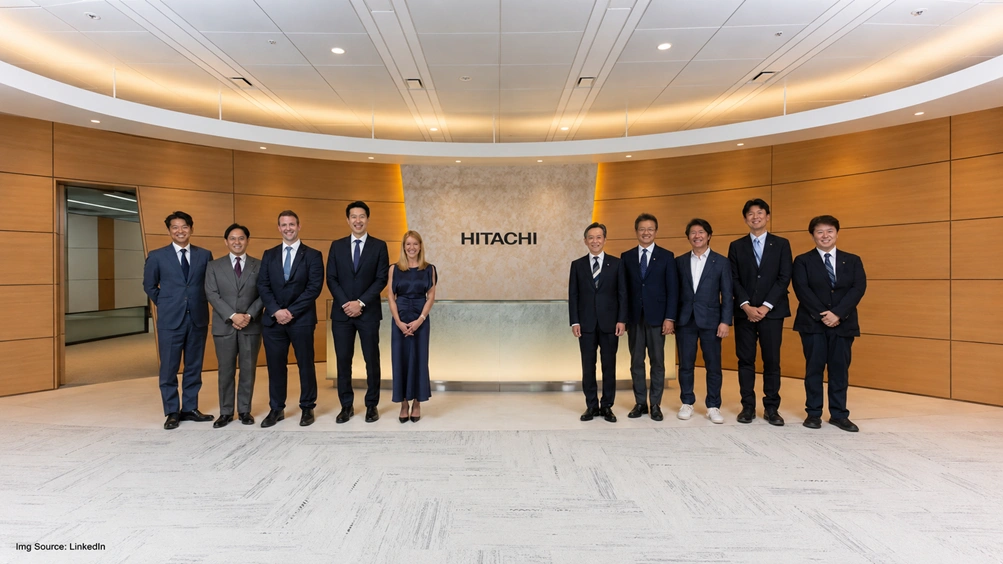
Hitachi, Ltd. expanded its work with OpenAI to accelerate AI-driven modernization and cybersecurity. The initiative combines OpenAI’s technology with Hitachi’s domain expertise in supporting mission-critical systems and social infrastructure. This collaboration aims to accelerate AI transformation for customers and society.
Enterprises seeking sustainable growth face clear challenges. The legacy systems have to be upgraded, but at the same time, any vulnerability needs to be eliminated. This alliance helps solve these issues perfectly by integrating the engineering skills of both the companies.
The approach makes use of sophisticated artificial intelligence to scan the older software program. Forward Deployed Engineer teams will use OpenAI’s Codex agent to inspect legacy systems. Consequently, this process provides enhanced visibility into system design to support safe migration.
“Hitachi has long been engaged in developing systems that support mission-critical social infrastructure, with approximately 15,000 systems currently in operation in Japan alone. Modernizing legacy systems and enhancing security are critical management priorities for all enterprises seeking sustainable growth in the age of AI. We are proud to work with OpenAI to address these challenges and drive transformation toward safer and reliable social infrastructure. Hitachi will further deepen its collaboration with OpenAI by leveraging the expertise of both companies’ FDEs to continuously enhance Lumada and HMAX, and accelerate AX for customers and society,” said Toshiaki Tokunaga, President & CEO, Hitachi, Ltd.
AI-Driven Modernization Speeds Financial Industry Upgrades
The initial rollout targets financial institutions specifically. Hitachi plans to scale these core system solutions sequentially to other sectors later. Meanwhile, the company will address immediate defense issues through separate technological pipelines. Hitachi will also access specific cybersecurity models through OpenAI’s Trusted Access for Cyber initiative. Notably, this program forms part of OpenAI’s Japan Cyber Action Plan to strengthen critical sector resilience.
The initiative introduces a strict framework for defensive operations. Hitachi will explore these models for legitimate defensive purposes like remediation and validation under OpenAI’s Daybreak-based structure. The deployment incorporates human oversight, safeguards, and strict governance. Hitachi’s Cyber CoE will act as Customer Zero by practicing these efforts internally. By doing so, the team validates internal systems and gathers insights to strengthen security.
“Our work with Hitachi is an important step toward enabling the safer and more practical use of AI in Japan’s critical industries and social infrastructure. OpenAI is committed to developing and deploying safe and beneficial AI, guided by our mission to ensure that AI benefits everyone. Applying AI to legacy system modernization and defensive cybersecurity is essential to strengthening the business foundations of Japanese enterprises. Through this work, we will help create an environment where companies can use AI with confidence and create new value, while helping AI become a practical force that expands the potential of people and organizations and supports the society of the future,” said Tadao Nagasaki, President, OpenAI Japan, Ltd.
Hitachi will apply these operational insights to enhance its next-generation AI solution suite, HMAX. As a result, customers receive support to build and operate resilient infrastructure systems. This expansion ultimately drives the practical adoption of safe technology across Japanese industries.
Explore IT Tech News for the latest advancements in Information Technology & insightful updates from industry experts!
News Source: Businesswire.com