
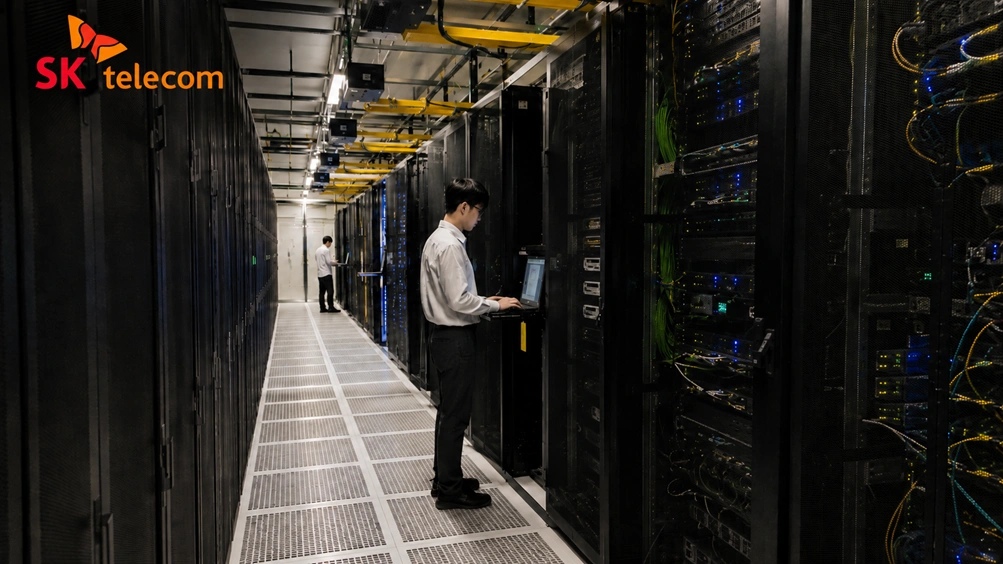
SK Telecom’s plans for a 15GW AI data center are a big step to build out AI infrastructure across Asia. The SK Telecom 15GW AI Data Center project is planned to boost high-performance computing power and meet the increasing demand for AI. The SK Telecom 15GW AI Data Center project also highlights the company’s long-term strategy to make Korea a top AI infrastructure hub.
The company said it plans to build as much as 15GW of AI data center capacity. This is a large-scale response to the growing demand for AI model training, inference and high-performance computing resources. SK Telecom is thus planning to build computing infrastructure before global capacity shortages worsen.
The project also backs the Korean government’s AI G3 strategy to position the country as one of the top three artificial intelligence powers in the world, alongside the United States and China. Also, the program fosters balanced regional development by way of infrastructure planning, electricity access, site selection and operational efficiency.
Ulsan AI Data Center to expand in several stages
SK Telecom plans to begin with its AI data center under construction in Ulsan. The company also plans to develop the facility into a regional cluster of more than 2GW across the Gyeongsang region. At the same time, it also intends to build another 1GW plant in the Jeolla region. These developments will add some 5GW of combined AI data center capacity. The company expects to start bringing that capacity on line gradually beginning in 2029. SK Telecom plans to expand the total capacity to 15GW over the longer term. With the increasing memory cost and the advanced computing infrastructure, building a typical 1GW AI data center is a costly affair. SK Telecom will therefore combine internal investment with strategic partnerships, project financing and long-term customer agreements.
According to global consulting firm McKinsey & Company, “Global data center demand will continue to grow between 19% and 22% per year. However, the supply expected to be available is not expected to meet demand, leading to an estimated 15GW shortfall in the US by 2030. These market conditions are still driving global tech firms to put new AI infrastructure in various parts of the world. South Korea has a number of competitive advantages for AI infrastructure projects. Among them are leadership in high bandwidth memory production, stable electricity supplies from nuclear power and liquefied natural gas, and extensive operational experience operating large semiconductor manufacturing facilities.
SK Group Unifies AI Infrastructure Expertise
The SK Group will leverage the strengths of its affiliates to support the project. The initiative combines expertise in semiconductor, energy solutions and AI data center build and operations. As such, the company intends to build a complete ecosystem of AI infrastructure. SK Telecom will be the AI Infrastructure Architect of the project, responsible for the overall planning, construction and operation of the facilities. The company has grown its AI data center business and increased collaboration with global tech companies.
SK Telecom President and CEO Jung Jai-hun announced the company’s AI infrastructure roadmap at the SK AI Summit 2025. He also outlined plans to expand cooperation with global tech companies while growing the Ulsan AI Data Center beyond 1GW. The company also announced last month its intention to open its next-generation AI Factory in 2027. The facility will be an AI data center, state of the art, scaling to gigawatt capacity.
Industry experts anticipate AI data centers to be strategic national assets while fostering regional economic development. The move could be Korea’s third big infrastructure revolution after the Gyeongbu Expressway and the roll-out of nationwide high-speed internet, SK Telecom said.
“This AI data center project is aimed at preemptively preparing the computing infrastructure that the global AI ecosystem needs,” said Jung Jai-hun, President and CEO of SKT. “We will work closely with the government, industry, and local communities to help Korea grow into Asia’s core AI infrastructure hub.”
Explore IT Tech News for the latest advancements in Information Technology & insightful updates from industry experts!
News Source: PRNewswire.com