
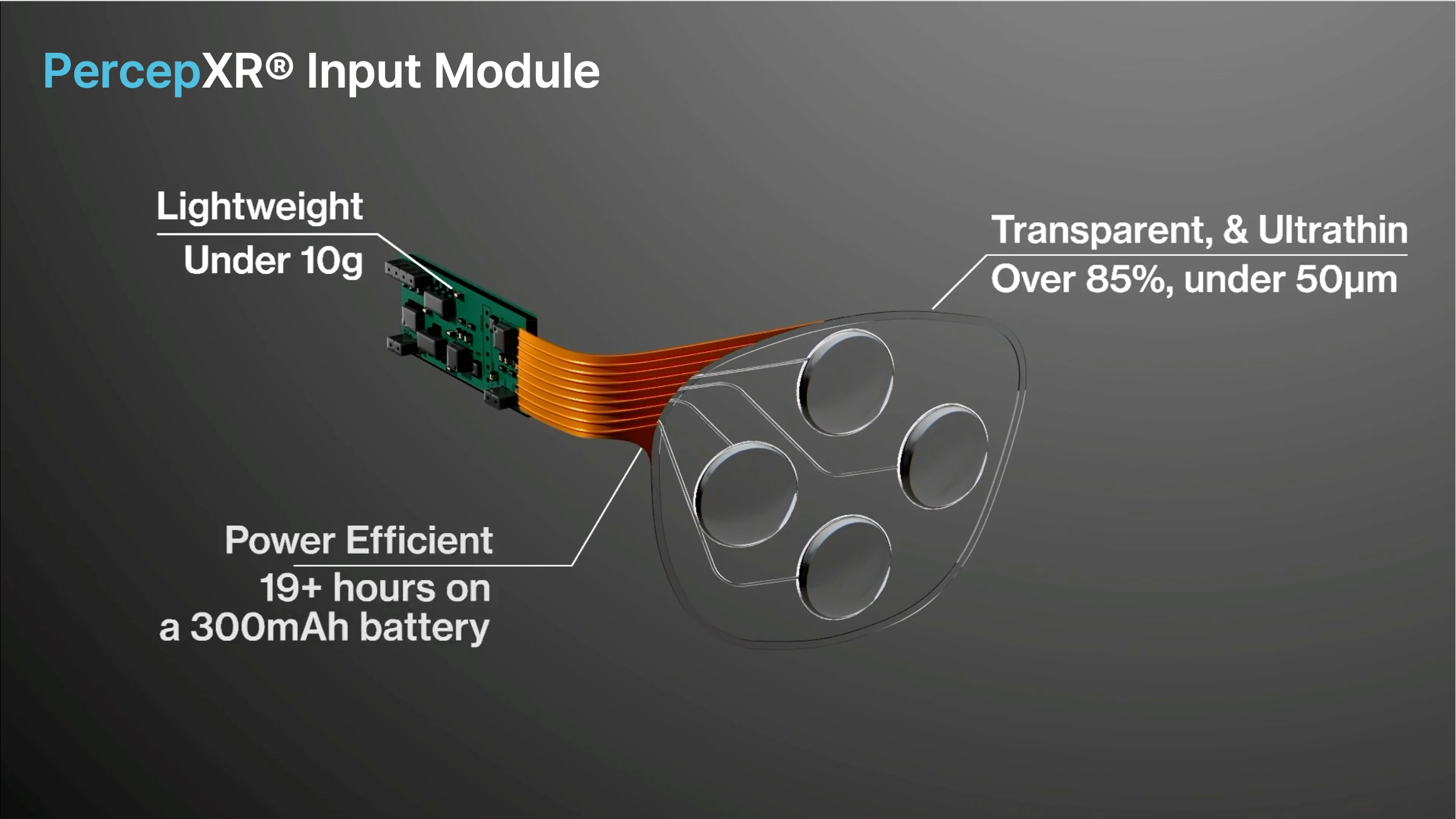
Softionics Inc. declared a major development in human-machine interfaces by launching its new vision-free electrostatic sensing solution. The company highlights that this breakthrough is what fundamentally powers spatial intelligence and physical AI in a totally new way. Moreover, the product, named PercepXR®, uses electrostatic fields rather than cameras. This enables transparent and ultra-thin films to sense the environment and motion without visible optics.
Softionics argues that electrostatic sensing without vision can bring advantages in terms of privacy, lower energy consumption, and increased resistance when compared to standard camera-based systems. In addition, this technology supports interactive surfaces, automotive cockpits, AR/VR systems, and ambient intelligence settings. The approach marks a pivot from “see” to “feel” within devices. Thereby redefining how machines perceive space and how humans interact with machines.
A New Interface for Spatial Intelligence
The company also highlights how PercepXR integrates into physical AI systems by combining electrostatic sensing with signal processing and AI inference. Therefore, developers can embed spatial-aware intelligence into devices. These devices react to gesture, proximity, and micro-motions without relying on cameras or LiDAR. Furthermore, the absence of image capture mitig ates privacy risks and reduces computational overhead.
In industry trends, vision-free electrostatic sensing meets the growing demand for easy-to-use interf aces, ambient computing, and edge AI. As enterprises push for smart surfaces, context-aware devices, and zero-optics interaction layers, Softionics’ solution situates itself at the intersection of UI/UX innovation and next-gen sensor design. Therefore, the startup can have a considerable impact in areas like automotive, consumer electronics, wearables, and building automation.
In summary, Softionics has introduced a new interface paradigm for spatial intelligence and physical AI through vision-free electrostatic sensing. With PercepXR, the company presents an alternative to camera-based sensing, and emphasising privacy. Also, to thin-form implementation, and ambient interaction. As the demand for smarter, less intrusive and more context-aware devices grows, this technology may well catalyse the next wave of human-machine interface innovation.
Explore IT Tech News for the latest advancements in Information Technology & insightful updates from industry experts!
News Source: EINPresswire.com